
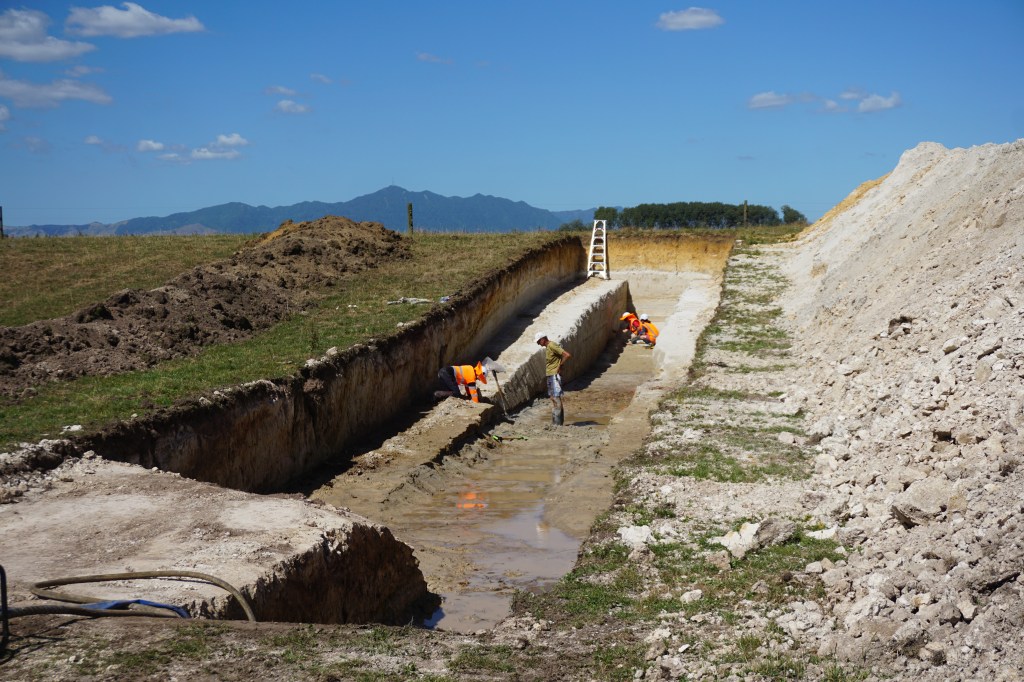
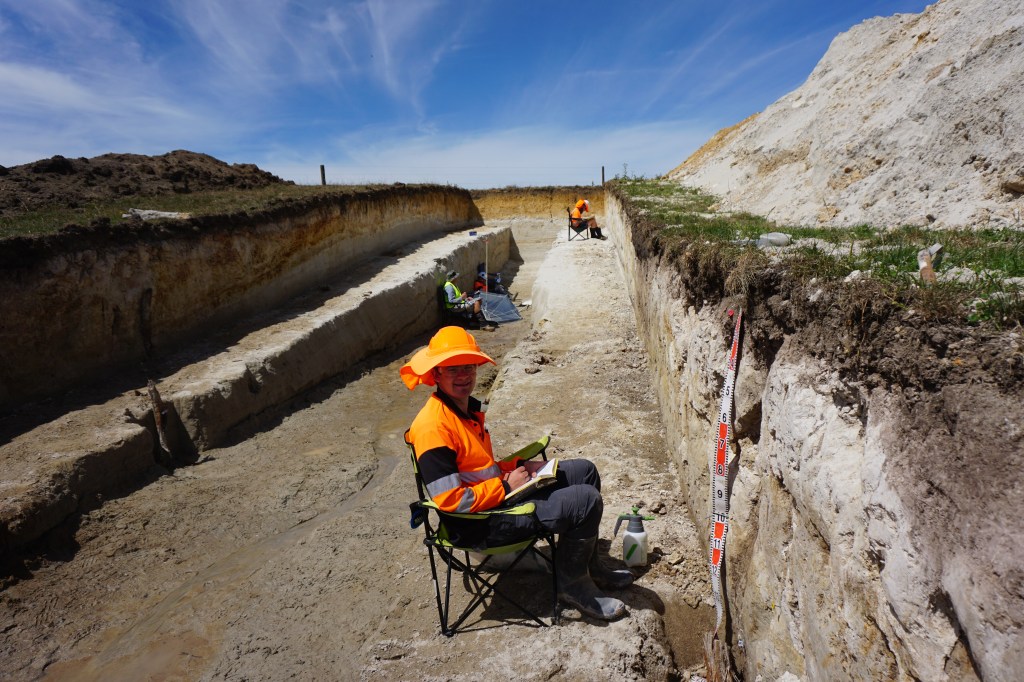
Hard on the heels of the paper published in January 2024 in the New Zealand Journal of Geology and Geophysics, members of the tephra seismites team joined GNS Science colleagues to renew their research on the Te Puninga Fault at two newly dug trenches across the fault (which is near Morrinsville) in late February 2024.
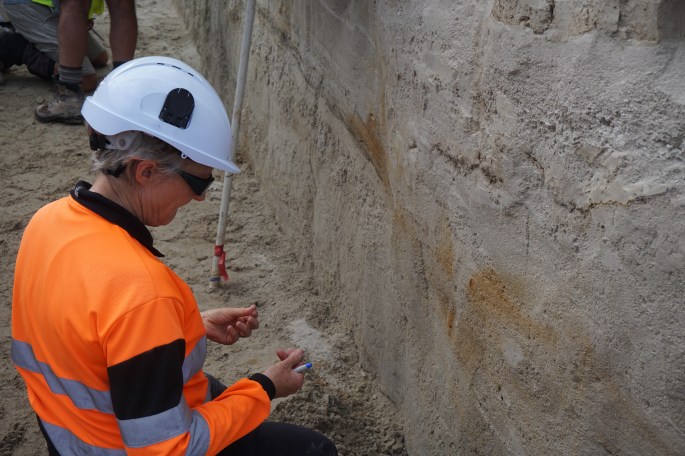
The excavations and field analyses of the deposits in the freshly exposed trench walls (see photos) were supervised by Dr Genevieve Coffey of GNS Science with support from GNS colleagues and also some geoscience staff from University of Auckland and University of Canterbury as well as University of Waikato.
The research on the fault is part of a joint project involving funding from the Marsden Fund provided to the University of Waikato (supporting the tephra seismites project) and from Toka Tū Ake EQC to GNS Science.
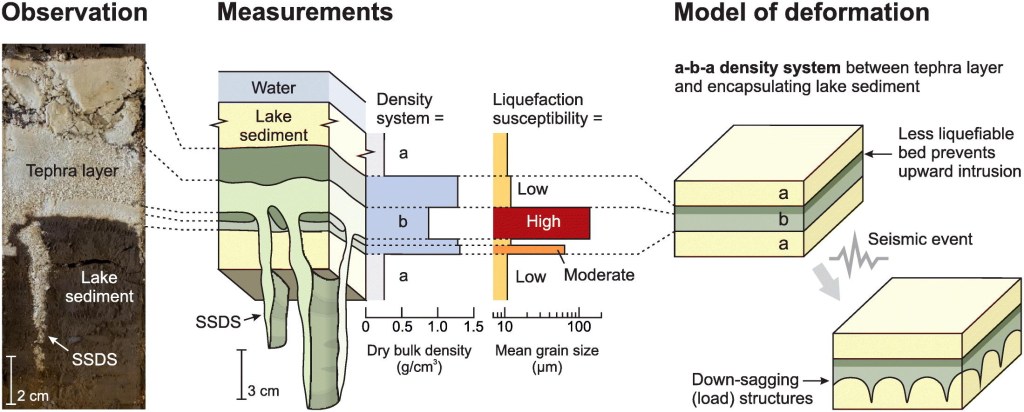
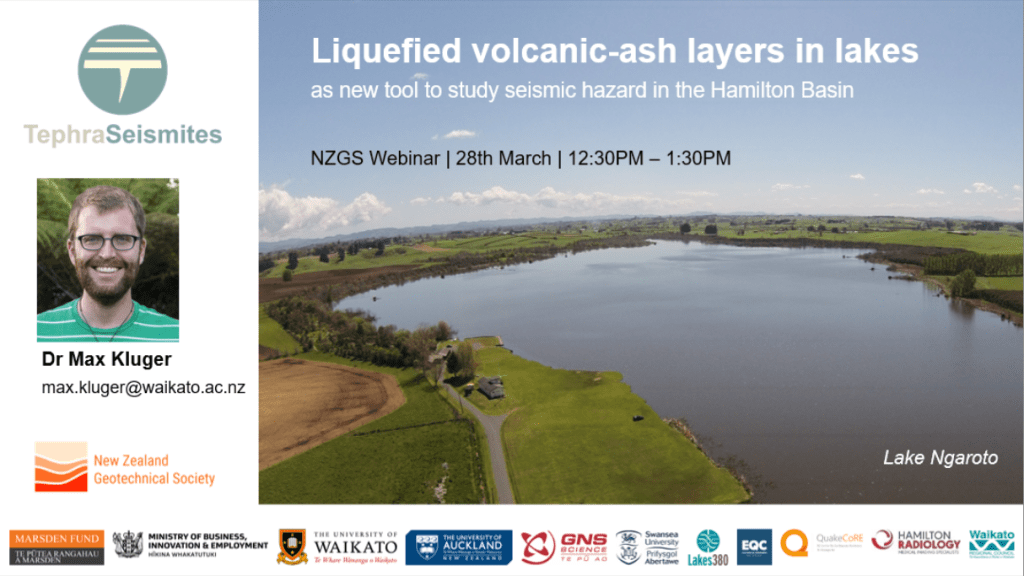
The Te Puninga Fault is important for the tephra seismites project because it is the closest fault to the north-eastern part of the Hamilton Basin, the focus of the project centred on liquefied tephra layers preserved in numerous lakes in the basin.
The trenching-based research on Te Puninga Fault represents the last phase of field work to be undertaken under the banner of the Marsden-funded tephra seismites project, which finished at the end of February 2024.
Various analyses and interpretations of arising from detailed examination and sampling of deposits exposed in the trench walls (at both sites) will continue through the year.








 Tephra Seismites