
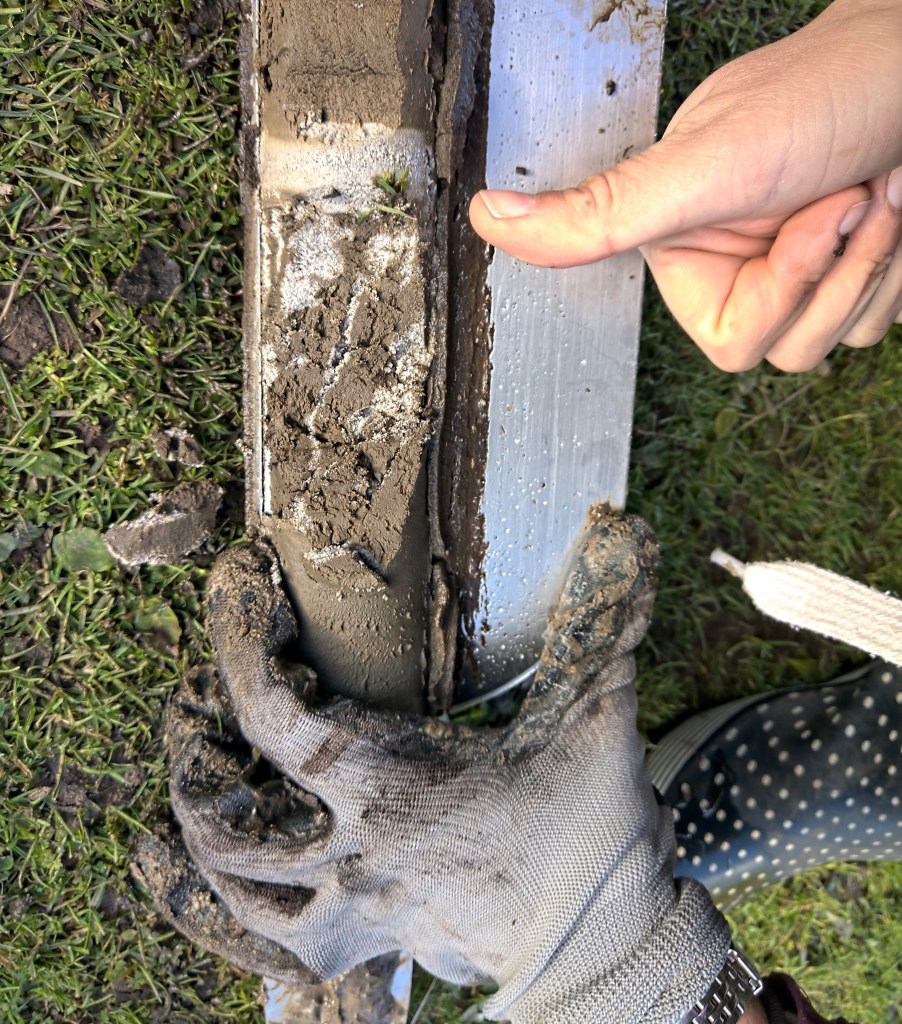
Our latest paper in Science Advances, led by Dr Max Kluger, brings together the key findings from the Tephra Seismites project.
Using cores from 18 lakes and using CT imaging, we looked at how the sizes and numbers of tephra seismites (liquefaction features in the volcanic ash) changed across the Hamilton Basin.
From this, we could infer that the liquefaction features were linked to five major earthquakes on Te Puninga and/or Kerepehi faults in Hauraki Basin, the newly discovered Kūkūtāruhe Fault in central Hamilton Basin, and either an unknown, hidden fault in the southeastern part of Hamilton Basin (near Te Awamutu) or an unmapped southern extension of Te Tātua ō Wairere Fault in the east-central Hamilton Basin.
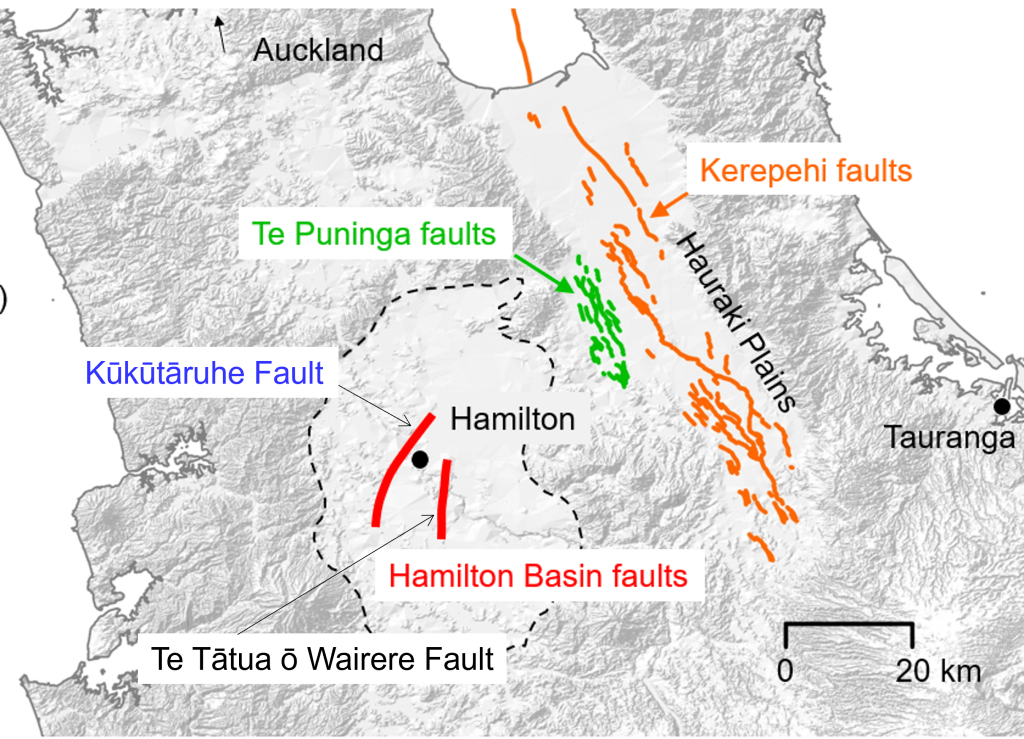
Using the ages of the volcanic ash layers, we were also able to estimate dates for the earthquake events. Finally, using a process called seismic modelling we confirmed which faults had ruptured and estimated the magnitudes (Mw) of each rupture (earthquake). Three of the earthquakes were magnitude 7.0 Mw or greater.
Hidden liquefaction features in thin tephra layers, revealed only by the CT scanning, show that two of these past earthquakes were within the last 1700 years.
The paper is available open access here.
 Tephra Seismites